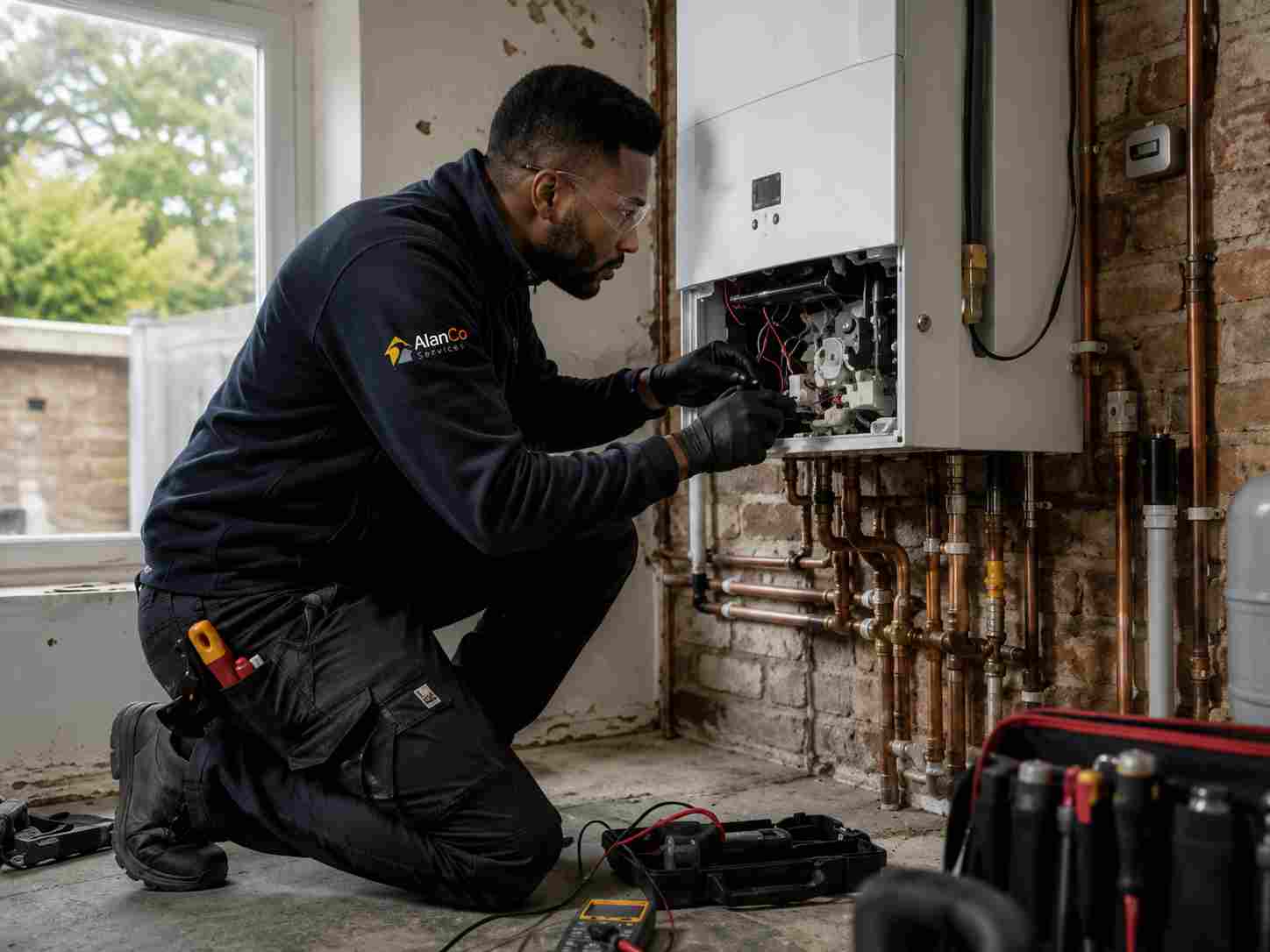
Boiler Installation London: The Complete 2026 Homeowner’s Guide to Getting It Right First Time
Introduction: Is Your Boiler Trying to Tell You Something?
Strange noises at 6am. A pilot light that keeps going out. A radiator that stays cold no matter how high you turn the dial. If any of that sounds familiar, your boiler isn’t being dramatic — it’s warning you.
Every winter, thousands of Londoners are caught out by a boiler that finally gives up, usually on the coldest night of the year. The good news? A boiler installation in London doesn’t have to mean weeks of waiting, confusing quotes, or an engineer you’ve never heard of showing up at your door.
This guide walks you through everything you need to know before booking a gas boiler installation in London — from spotting the warning signs, to choosing the right boiler type, to understanding what fair pricing actually looks like in 2026. Whether you’re in Kensington, Chelsea, Earls Court, or anywhere across the capital, by the end of this article you’ll know exactly what to ask for and who to trust with the job.
Why Boiler Installation Isn’t a DIY-Adjacent Job
Let’s get one thing straight: boiler work in the UK is legally restricted for a reason. Gas appliances, if fitted incorrectly, can leak carbon monoxide — a gas you can’t see, smell, or taste, but one that can be fatal.
That’s why any boiler installation in London must be carried out by a Gas Safe registered engineer. It’s not a nice-to-have; it’s the law. Always ask to see an engineer’s Gas Safe ID card before they start work, and check the card covers boilers specifically (not just cookers or fires).
Beyond the legal requirement, a properly installed boiler also:
- Runs more efficiently, cutting your energy bills
- Comes with a valid manufacturer warranty (often 7–10 years)
- Passes building control sign-off without issues
- Reduces the risk of breakdowns in your first winter
Cutting corners here rarely saves money — it just delays the cost and adds a repair bill on top.
Signs You Need a New Boiler (Not Just a Repair)
Not every fault means a full replacement, but certain signs point clearly toward new boiler installation rather than another patch-up repair:
- Age. Most boilers last 10–15 years. If yours is pushing 15, replacement parts get harder to find and less cost-effective to fit.
- Rising energy bills with no change in usage — older boilers lose efficiency over time.
- Frequent breakdowns. If you’re calling an engineer more than once a year, the maths usually favours a new unit.
- Yellow pilot light instead of blue. This can indicate incomplete combustion and a possible carbon monoxide risk — treat this as urgent.
- Strange noises — banging, whistling, or gurgling (often called “kettling”).
- No longer covered by warranty, leaving you exposed to full repair costs.
If two or more of these apply to you, it’s worth getting a professional opinion rather than waiting for a full breakdown in January.
Types of Boilers Available for London Homes
London properties vary hugely — from Victorian terraces in Wandsworth to modern flats in Canary Wharf — so the right boiler depends on your home, not just your budget.
Combi Boilers
The most popular choice for London flats and smaller homes. They heat water on demand, so there’s no need for a separate cylinder or tank — ideal where space is tight.
System Boilers
A good fit for homes with multiple bathrooms. These use a cylinder to store hot water, meaning several taps or showers can run at once without a drop in pressure.
Conventional (Regular) Boilers
Often used when replacing an older system like-for-like, especially in larger period properties that already have a tank in the loft and a cylinder in the airing cupboard.
A qualified engineer should assess your property’s size, hot water demand, and existing pipework before recommending which type suits your home — not just quote the cheapest option.
How Much Does Boiler Installation Cost in London?
This is usually the first question homeowners ask, and fair enough — it’s a meaningful investment. While prices vary depending on boiler brand, output size, and the complexity of the job (moving a boiler’s location, upgrading pipework, or fitting a flue extension all add cost), here’s what typically affects your quote:
- Boiler type and brand — combi boilers are generally the most affordable to install
- Property size and hot water demand — bigger homes need higher-output boilers
- Access and location — lofts, tight cupboards, or relocated boilers can increase labour time
- Additional work — new flue, upgraded controls, or a power flush of the system
A reputable local engineer will always give you a clear, itemised quote before starting — with no vague “we’ll see once we’re in there” pricing. AlanCo Services believes in transparent pricing with no hidden fees, so you know the full cost upfront before any work begins.
What to Expect: The Boiler Installation Process
Understanding the process helps you know what a fair, professional job actually looks like.
1. Free Survey and Quote
An engineer visits your property (or reviews photos/details you provide) to recommend the right boiler size and type, then gives you a fixed price.
2. Scheduling the Installation
Most straightforward like-for-like replacements are completed within a single day. More involved jobs — like relocating the boiler or upgrading the whole heating system — may take longer, though a well-run team like AlanCo aims to complete most installations within 48 hours.
3. Removal of the Old Boiler
The old unit is safely disconnected and removed, along with any redundant pipework if you’re switching boiler types.
4. Installing and Connecting the New Boiler
This includes fitting the flue, connecting to gas and water supplies, wiring the controls, and testing the system.
5. Testing, Gas Safety Certification, and Handover
Once installed, the engineer tests the system, issues a Gas Safety Certificate, and talks you through your new controls and warranty.
6. Registration
Your installer registers the boiler with the manufacturer (for warranty purposes) and with Gas Safe/Building Control, where applicable.
Boiler Installation vs. Boiler Repair: How to Decide
A common question homeowners ask: “Should I repair or replace?”
Choose repair when:
- The boiler is under 8 years old
- It’s a single, isolated fault (like a broken valve or sensor)
- The repair cost is under roughly a third of a new installation
Choose replacement when:
- The boiler is 12+ years old
- You’ve had repeated call-outs in the past year
- Replacement parts are becoming hard to source
- Your energy bills keep climbing despite no change in habits
If you’re not sure which camp you fall into, an experienced heating engineer can usually tell within a short inspection — and a good one will tell you honestly, even if repair is the cheaper (and correct) route for you.
Why Choose a Local London Boiler Installer
London throws up specific challenges that a national call-centre company often can’t handle as well as a local team: period properties with older pipework, flats with restricted access, listed building regulations in boroughs like Kensington and Chelsea, and tight parking that adds time to every job.
A local boiler installation team in London brings:
- Familiarity with London property types, from Victorian conversions to new-build flats
- Faster response times for emergencies — no waiting days for a van to travel across the M25
- Local reputation and reviews you can actually verify
- Better understanding of borough-specific building regulations
This is exactly where AlanCo Services’ Boiler Installation team comes in. As a family-run business operating since 2020 (built on two decades of hands-on plumbing experience before that), AlanCo’s Gas Safe registered engineers have fitted and serviced boilers across Kensington, Chelsea, Earls Court, and boroughs citywide — with a reputation built on transparent pricing and zero call-out charges, 24/7.
Aftercare: Getting the Most From Your New Boiler
Installation is only half the story. To protect your investment and warranty:
- Book an annual service. Most warranties require yearly servicing to stay valid.
- Bleed your radiators if you notice cold spots, especially at the top.
- Check your boiler pressure regularly — most sit comfortably between 1 and 1.5 bar.
- Insulate exposed pipework, especially in lofts, to prevent freezing in winter.
- Keep the manufacturer’s manual and installation certificate somewhere safe — you’ll need them for warranty claims or when selling your home.
For ongoing peace of mind, many AlanCo customers also arrange annual servicing and safety checks through the same Heating services team who carried out the original installation — one point of contact for the whole life of your boiler.
Frequently Asked Questions
How long does a boiler installation take in London? Most straightforward, like-for-like combi boiler replacements are completed in a single day. More complex jobs — such as relocating the boiler or converting from a conventional to a combi system — can take one to two days.
Do I need planning permission for a new boiler? Generally no, boiler installation falls under permitted development. However, if you’re in a listed building or conservation area (common in parts of Kensington and Chelsea), it’s worth checking with your installer, as flue positioning can sometimes require consent.
Is it cheaper to repair or replace my boiler? It depends on the boiler’s age and the fault. As a rule of thumb, if the repair cost exceeds roughly a third of a new boiler’s price, or the unit is over 12 years old, replacement is usually the better long-term investment.
What’s the difference between a combi and system boiler? A combi boiler heats water directly on demand with no storage tank, ideal for flats and smaller homes. A system boiler stores hot water in a cylinder, better suited to homes with multiple bathrooms and higher simultaneous demand.
Do I need a Gas Safety Certificate after installation? Yes. Any Gas Safe registered engineer must issue a Gas Safety Certificate (also called a CP12 in rented properties) confirming the work meets current safety standards. Always ask for and keep this document.
How much does gas boiler installation cost in London? Costs vary based on boiler type, output size, and the complexity of installation (such as moving the boiler’s location or upgrading pipework). A reputable installer will always provide a clear, itemised, no-obligation quote before starting work.
Can I get emergency boiler installation in London? Yes — many London heating companies, including AlanCo Services, offer 24/7 emergency response, so a broken boiler in the middle of winter doesn’t have to mean days without heating or hot water.
Ready for a Boiler That Just Works?
A cold radiator on a January morning is one problem you can plan your way out of. With the right engineer, a professional boiler installation in London is straightforward, transparent, and done fast — no jargon, no inflated quotes, no disappearing acts.
If your boiler is on its last legs, or you simply want a second opinion from a Gas Safe registered engineer, AlanCo Services is ready to help. Family-run, London-based, and trusted across Kensington, Chelsea, Earls Court and boroughs citywide, with transparent pricing and zero call-out charges, 24/7.
📞 Call 020 7835 0784 or book your free boiler installation quote online today — and get ready for a winter you don’t have to think twice about.